









Pros and Cons of a Carry-On vs. a Checked Bag
Every journey begins with a choice: what do you bring, and how do you carry it? The decision between a carry-on vs. a checked bag shapes the rhythm of your travel, your freedom to move, and how seamlessly your luggage supports your plans.
We’ve spent decades engineering travelware that meets you at the intersection of performance and purpose. In this guide, we’ll walk through the considerations that matter, so you can travel with exactly what you need.
The Difference Between a Carry-On and a Checked Bag
Choosing the right luggage starts with understanding how the two most common options compare. While they both serve the same purpose—getting your belongings from one place to the next—their function, handling, and restrictions vary in ways that directly impact your travel experience.
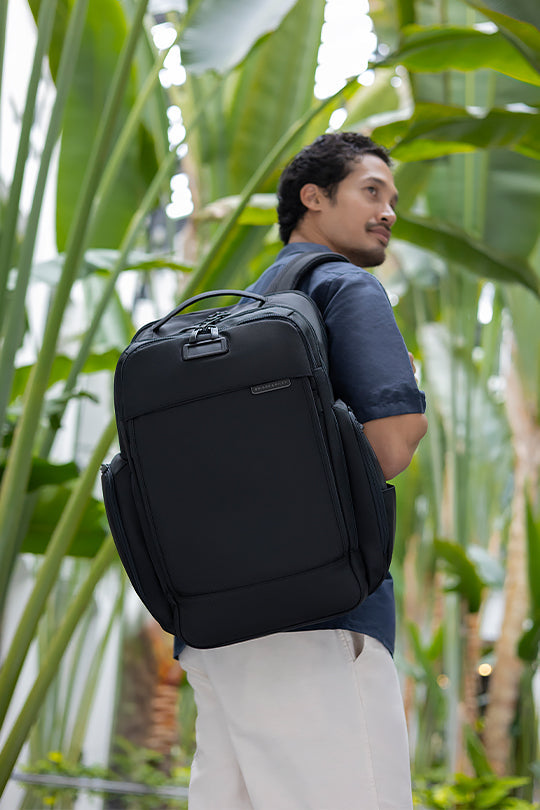
Carry-On Bags: Compact, Accessible, and Always by Your Side
Carry-on luggage refers to bags small enough to bring with you into the cabin of the plane. Most airlines set size limits for these bags, and exact measurements vary by carrier. A well-designed carry-on offers structured interior space, thoughtful compartments, and smooth handling, all within a format that fits overhead and stays close throughout the trip.
This option is ideal for short getaways, business travel, or any itinerary where convenience matters more than capacity.
Checked Bags: More Space, Less Flexibility
A checked bag is stored in the aircraft's hold and is typically handed over at the check-in counter. Airlines allow larger dimensions and heavier weights for checked luggage, making it the go-to for longer trips, bulky items, or gear-heavy travel like ski holidays or destination weddings.
A checked bag is stored in the aircraft's hold and is typically handed over at the check-in counter. Airlines allow larger dimensions and heavier weights for checked luggage, making it the go-to for longer trips, bulky items, or gear-heavy travel like ski holidays or destination weddings.
Key Comparison: Carry-On vs. Checked Bag Size
Size is one of the most immediate and essential differences. Carry-ons are built for efficiency and access, while checked bags are designed for volume. When evaluating carry-on vs. checked bag size, travelers should factor in airline rules, the duration of their trip, and how they like to move through an airport.
At Briggs & Riley, we engineer carry-ons and checked luggage to meet common size restrictions across major airlines while maximizing internal capacity through innovations like our Outsider® handle system, which provides a flat internal surface for packing, and CX® compression-expansion technology, which allows you to expand your bag to pack more in and then compress it back to its original size.
Is a Carry-On a Checked Bag?
No, a carry-on is not the same as a checked bag. While both are forms of luggage, the difference lies in how they're handled during the travel process. A carry-on stays with you; a checked bag is stored in the cargo hold. Knowing the distinction helps you avoid extra fees, delays, or the inconvenience of having to gate-check a bag that doesn't meet size rules.
Understanding the difference between a carry-on and checked bag options ensures you pack with purpose and travel the way you prefer.
Carry-On Luggage: Convenience in Motion
Carry-on luggage offers a level of ease that experienced travelers often prefer. You keep your bag with you from takeoff to landing, no waiting at check-in, no standing around at baggage claim, no risk of it getting lost along the way. For short trips or tight transfers, carry-on travel keeps you agile and in control.
We design our carry-ons with that rhythm in mind. Every detail, from the durability of the frame to the precision of the zippers, supports smooth movement and smart packing.

Ideal for Efficient Travel
When your itinerary includes a business meeting, a weekend escape, or multiple connections, a carry-on delivers exactly what you need. You can move through the airport with ease and go straight from the gate to your plans. Travelers who rely on carry-on luggage often find that streamlined packing leads to a clearer, more efficient experience.
It's not about bringing less; it's about bringing what matters.
Carry-On vs. Checked Bag: Freedom Over Volume
Choosing between a carry-on vs. a checked bag often comes down to your priorities. If freedom of movement, ease of access, and time saved take precedence over a few extra outfits, the carry-on fits the trip.
We build carry-on luggage for travelers who value thoughtful engineering, lasting quality, and the kind of seamless performance that lets them focus on the journey ahead, not the logistics behind it.
Checked Luggage: When Capacity Matters
Checked luggage gives you the space to bring what a carry-on can't accommodate. Whether you're traveling for an extended stay, packing formalwear, or managing a mix of climates, a checked bag handles it all with ease. There's no need to weigh every item or limit your options; this is where volume works in your favor.
For longer journeys or trips that call for gear, a thoughtfully designed checked bag helps you travel prepared, not overloaded.
The Strength of a Well-Built Checked Bag
When your bag leaves your hands at the ticket counter, construction matters. We build our checked luggage to handle the realities of air travel while keeping your belongings secure. Reinforced corners, premium hardware, and high-performance wheels are part of our promise to deliver luggage that lasts.
Inside, every inch is useful. Structured compartments and generous capacity make it easier to stay organized, even when you're packing more.

Checked Bag vs Carry-On: Make the Most of Your Mileage
Choosing between a checked bag vs. a carry-on often comes down to the kind of trip you're planning. If you're heading abroad for two weeks, attending a destination wedding, or traveling with sports equipment, the extra space in a checked bag offers real value. You gain flexibility, not just in what you bring but also in how comfortably you pack it.
You'll need to factor in extra time at the airport, checking in, retrieving your bag after landing, and occasionally waiting through delays. But for many travelers, that trade-off is well worth the added capacity.
The Art of Travel
Always Enhancing the Travel Experience


Packing Tips: What Goes Where
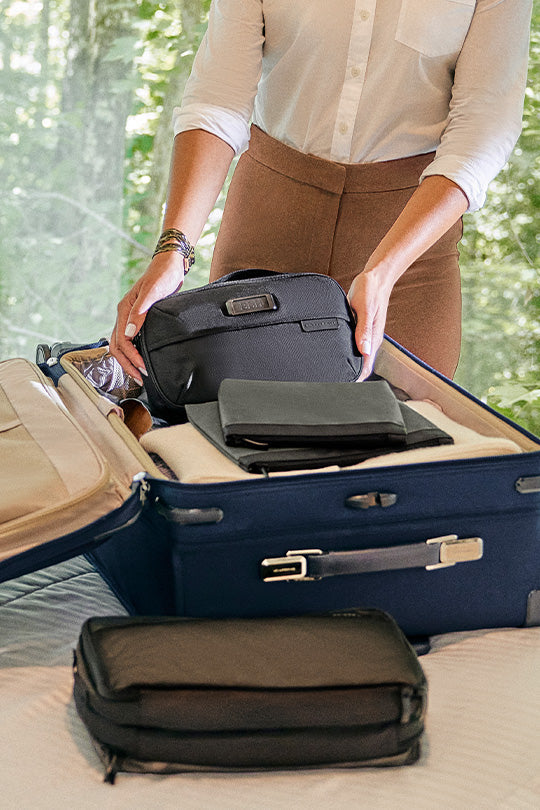
Smart packing means knowing what belongs where, and why. The distinction between a carry-on and a checked bag isn't just about size. It's about access, security, and how well your luggage supports the way you move. Whether you're traveling with one bag or both, where you place each item matters.
What to Pack in Your Carry-On
Think of your carry-on as your in-flight essentials kit and your quick-access storage. Anything you might need between takeoff and landing should be within reach.
Pack the following in your carry-on:
- Travel documents, passport, and wallet
- Medications, prescription items, and personal care basics
- Laptop, chargers, headphones, and mobile devices
- Valuables like jewelry or important electronics
- Snacks, books, and comfort items for the plane
- A lightweight jacket or scarf
Your carry-on protects the things you can't afford to lose or delay. That's why security, structure, and ease of access are core to every bag we build.
What Can't Go In Your Carry-On
While your carry-on can accommodate numerous items, there's a very specific list of things that TSA bans in carry-ons. This includes:
What to Pack in Your Checked Bag
Checked luggage handles the bulk of your load. It's the right place for items you won't need in transit but will rely on once you arrive.
Pack the following in your checked bag:
- Full outfits for each day of your trip (or mix-and-match pieces)
- Shoes not worn during travel
- Toiletries that exceed the TSA's carry-on liquid limits
- Bulkier items like coats, sweaters, or boots
- Extra accessories, occasion-specific outfits, or workout gear
- Backup items like additional chargers or secondary footwear
Just be sure to avoid packing anything that can't be easily replaced or that you absolutely need on arrival day. Lost bags are rare, but preparation provides peace of mind.
What Not to Pack In Your Checked Luggage
Properly packed firearms are allowed in checked luggage, but other items aren't. These include things like full or partially full CO2 cylinders and butane.
Whether you're using a carry-on, a checked bag, or both, the key is clarity. Know what goes where, and why. Pack with intention, and every part of the journey becomes easier.
Choosing What's Right for Your Trip
Every traveler moves differently. Some value speed and simplicity; others need space to bring their plans to life. The choice between a carry-on vs. a checked bag isn't about which is better. It's about which fits your itinerary, your travel style, and the experience you want from start to finish.
At Briggs & Riley, we believe thoughtful preparation is part of what makes a trip memorable. Your luggage should complement your journey.
When to Choose a Carry-On
A carry-on is often the right choice when:
- You're traveling for a short trip (typically up to a week)
- You want to avoid baggage claim and keep your pace
- You're traveling light and prefer to keep everything within reach
- You need to pack valuables, medications, or sensitive gear you don't want out of sight
We craft our carry-on luggage to move with you while giving you the structure and performance to stay organized.
When to Choose a Checked Bag
A checked bag is your best option when:
- You're traveling for longer than a week
- You're packing multiple outfits for different occasions or climates
- You need to bring gear, gifts, or bulkier items
- Your carry-on would exceed airline size or weight limits
- You're traveling with family or sharing space with others
Our checked luggage combines generous capacity with thoughtful design. These bags carry more without sacrificing durability, so you can bring what you need and stay confident in how it's handled.
One Brand, Two Purpose-Built Solutions
Some trips call for simplicity. Others require flexibility. That's why we build carry-ons and checked bags with the same commitment to enduring quality, intuitive design, and performance that holds up over time.
If you're still deciding between a checked bag vs. a carry-on, take a moment to consider what your trip demands and what kind of travel experience you value most. Whichever route you take, you'll find our luggage is made to support it.
The Perfect Travel Bags
Your Companion for Every Journey


Find the Right Fit for Your Travels
Whether you're packing light or bringing it all, the right luggage transforms the way you travel. Explore our full collection of thoughtfully engineered carry-on and checked bags to discover the perfect match for your next trip. The choice between a carry-on vs. a checked bag starts here, with performance, purpose, and a lifetime of reliability.
Frequently Asked Questions About Carry-On Spinner Luggage
Travel comes with questions, and the right answers can make all the difference. Below, we've covered a few key details to help you get even more out of your Briggs & Riley experience.


